

I was born in 1983.
Which means I grew up in a world that many younger creators today have never experienced: a world before the internet, before smartphones, before everything became instant.
Back then, creativity looked very different.
If you wanted to listen to your favorite song, you didn’t open Spotify.
You waited.
You waited for it to play on the radio.
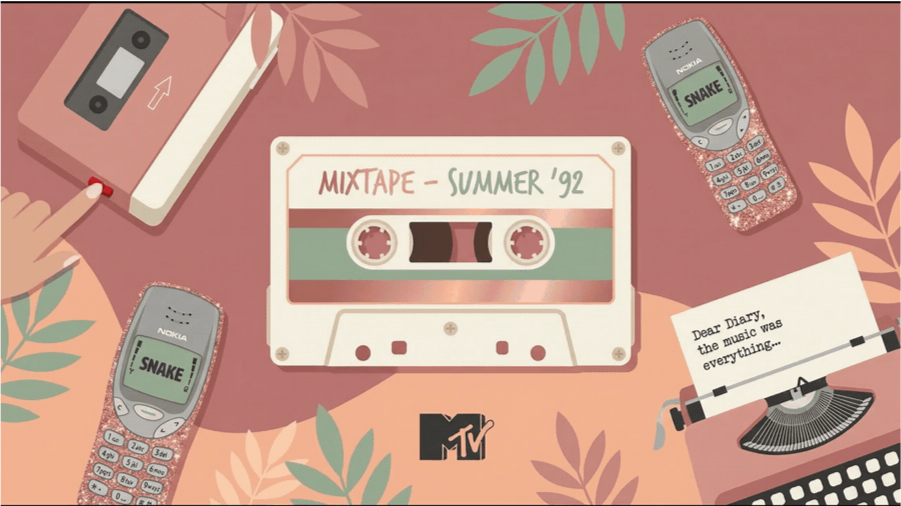
Finger hovering over the record button on your cassette player, hoping the DJ wouldn’t start talking right when the intro began.
And when the song finally came on, you pressed record and held your breath.
Sometimes I loved a song so much that I recorded it on both sides of the cassette.
That was my version of a playlist.
Creativity before convenience
Today we call it the AI era. But for many creators like me, it’s simply the latest chapter in a long technological evolution.
An app.
A template.
A prompt.
But back then, creativity started with patience.
If you wanted a mixtape, you had to create it yourself.
You listened, waited, recorded, rewound, and sometimes started all over again because someone talked in the background.
Nothing was instant.
And maybe that’s why it felt so intentional.
The MTV generation
By the mid-90s, my world expanded.
Music videos started to dominate our evenings.
I remember watching shows on MTV late at night, discovering new artists, new sounds, and new visual worlds.
Music wasn’t just something you heard.
It was something you watched, felt, and waited for.
Every new video felt like an event.
And of course, there were phases.
For me, one of them was the Backstreet Boys era.
(Team Brian, obviously.)
These small cultural moments shaped an entire generation of creators without us realizing it.
We learned storytelling, aesthetics, rhythm, emotion — all before social media even existed.
The first technological shift
Then came the first real wave of digital tools.
Computers.
But not the kind we know today.
Big monitors.
Heavy PCs.
Windows systems that mostly allowed us to write documents.
No internet yet.
At least not in our home.
The computer was simply a tool for typing, not a gateway to the entire world.
Before that, we even learned the ten-finger typing system on typewriters in school.
The sound of keys hitting paper.
Tip. Tip. Tip.
And if you made a mistake?
You didn’t press backspace.
You used correction fluid.
Every word required effort.
The moment mobility arrived
I still remember the Christmas when my sister and I received our first mobile phones.
Two identical Nokia 3210s under the tree.
At the time, it felt like the future had arrived in our living room.
Back then, phones weren’t mini computers.
They were for calling, texting, and maybe playing Snake.
And the battery lasted for days.
Phone cases didn’t exist the way they do today.
So we decorated the covers ourselves.
With nail polish.
Sometimes even glitter.
Looking back, it feels almost funny how simple things were.
But also how creative we were with what we had.
The internet slowly entered our lives
When the internet finally arrived in my life, it didn’t feel like a revolution.
It felt like the next step.
One more tool.
At first, we didn’t fully understand its impact.
Friends would download songs and burn them onto CDs.
We shared music collections, wrote track lists by hand, and built our own compilations.
Looking back, it was the early version of what we now call digital culture.
Sharing.
Curating.
Re-mixing.
The behavior stayed the same.
Only the tools evolved.
Growing up between two worlds
What I realize today is that my generation grew up between two completely different technological worlds.
We experienced:
cassette tapes
CDs
typewriters
early computers
the internet
mobile phones
smartphones
and now artificial intelligence
All within one lifetime.
Technology didn’t suddenly appear.
We grew into it step by step.
And maybe that’s why many of us see things differently today.
The AI era
Fast forward to now.
Today we live in a world where AI can generate:
designs
text
ideas
images
strategies
Sometimes within seconds.
For many people, this feels overwhelming.
And I understand why.
Because the speed of technological change has never been this intense before.
But from my perspective, AI is simply the next step in a very long evolution.
Another tool.
A powerful one, yes.
But still just a tool.
The real question isn’t AI
The real question is how we choose to use it.
Some people try to replace their creativity with AI.
Others reject the technology completely.
But I believe the most interesting place is somewhere in the middle.
AI can remove friction.
But it cannot replace human perspective.
It cannot replace experience.
It cannot replace the stories we carry with us.
Why human creativity still matters
AI can generate text.
But it cannot recreate the feeling of waiting for your favorite song on the radio.
It cannot remember decorating a phone with nail polish.
It cannot remember learning to type on a typewriter.
These experiences shape how we think.
And how we create.
Creativity doesn’t come from tools.
It comes from people.
The bridge generation
Sometimes I feel like my generation stands right in the middle of two worlds.
The analog world we grew up in.
And the AI-driven world we are entering now.
And maybe that’s not a disadvantage.
Maybe it’s exactly what this moment needs.
Because we remember a time when things were slower.
More intentional.
More human.
And that perspective might help us navigate what comes next.
What this series will explore
In this Creator System Series, I want to explore what it means to build, create, and think in this new AI era.
Not just in terms of tools.
But in terms of systems, creativity, and the quiet wisdom that comes from having lived through more than one technological revolution.
Because I think there’s something important in the way we learned to create before convenience arrived.
The patience. The intention. The joy of making something with whatever you had.
That feeling — finger hovering over the record button, waiting for exactly the right moment — never really left me.
I just press different buttons now.
If you grew up between two worlds, and you’re still figuring out how to bring your whole self into this new one — this series is for you.
We’re building something here.
One system, one story, one cassette tape at a time. 🧡