

The number was 62.6%.
I was sitting with my phone in my hand, looking at a DNA ethnicity report, and the number just sat there. 62.6% Balkan. And beneath it, the genetic group: Kroatien — Lika-Senj und Primorje-Gorski Kotar.
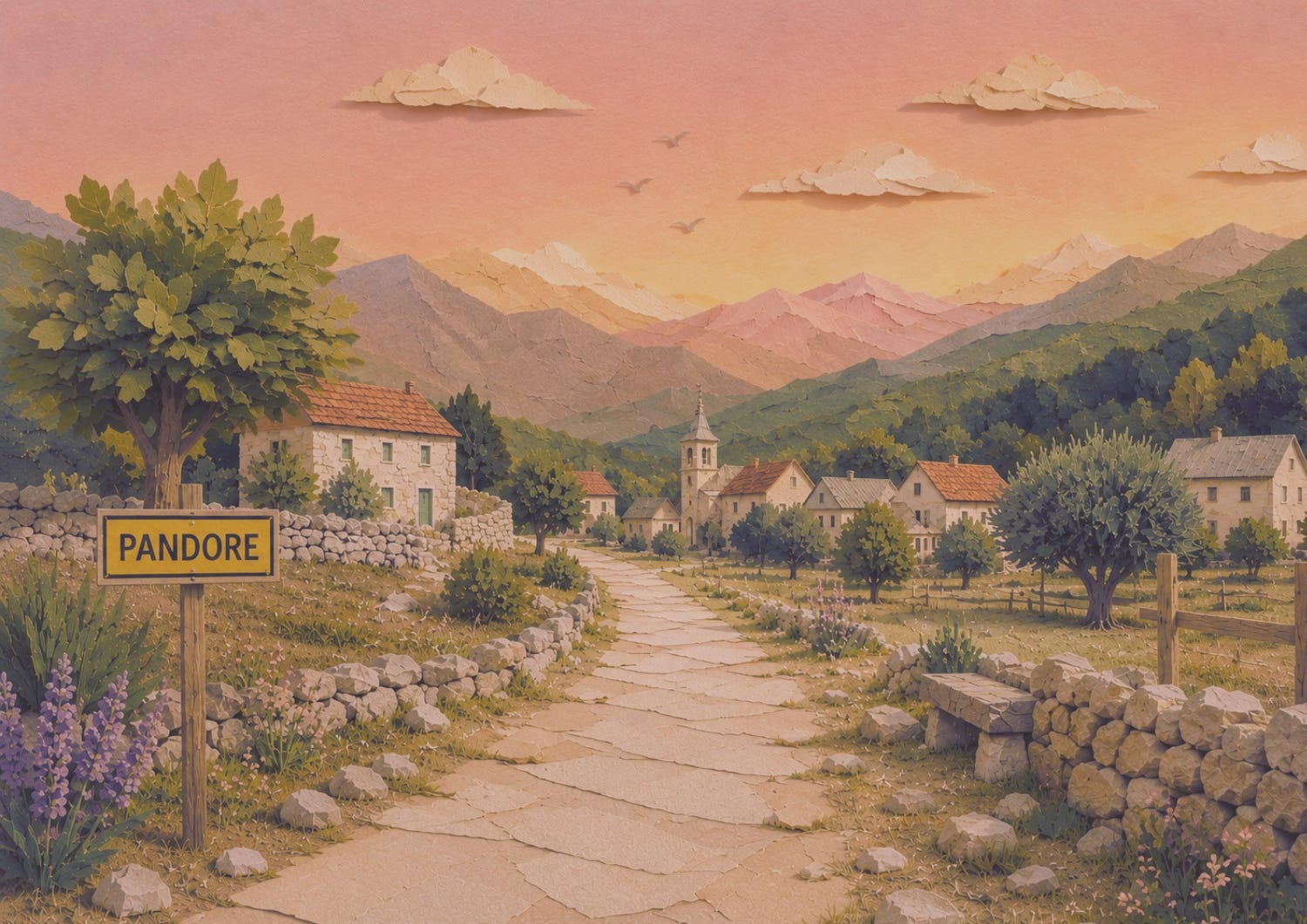
Not just “Croatian.” Not a vague Adriatic somewhere. The algorithm pointed its digital finger at the exact strip of land between the sea and the Velebit mountain. The exact region where you turn off the coastal road in Sveti Juraj and drive toward a village called Pandore.
I know that road.
My father was born there.
Pandore isn’t on most maps. It’s the kind of place you find by knowing it exists, not by searching for it. A few houses. The smell of pine and salt in the same breath. The mountain on one side, the Adriatic glittering below. When the Bura wind comes — and it always comes, Senj is famous for its Bura — it arrives from the Velebit, passes through places like Pandore, and hits the coast like it has something to prove.
People from this region are like that. They tend to have something to prove. Or rather — they tend not to need to prove anything to anyone, which looks like the same thing from the outside.
My Baka. The strongest woman I knew. Takva je bila — that’s how she was — which in Croatian is both a description and an entire eulogy.
She sold eggs. That was part of what she did, like most women of her generation in that part of the world. You kept chickens, you sold eggs, you made do. Nismo niš imali, samo ono što smo stvorili našim rukama. We had nothing. Only what we created with our own hands.
At some point she was selling her eggs to Italian traders. The coast had that kind of traffic. And one of them, inspecting the merchandise, said something she never forgot:
“Piccole.” Small.
Her eggs were piccole.
I can hear exactly how she responded — across time, across language, with the full weight of Lika-Senj in her voice:
Ma jebem ti piccole. Moja jaja nisu mala.
I have been thinking about Baka a lot lately. You might know that already, since I mention her in my articles quite often.
Not because I’m sentimental — though I am, more than I usually show — but because I’ve been thinking about where things come from. Not metaphorically. Literally. What is actually in the foundation.
I’ve spent much time building BabicADesigns. Finding language for what I do. Arriving at “the Balkanish AI Way” not as a marketing decision, but as the only honest description of how I work.
And then a DNA test points at the exact land my father came from, and beneath the percentages, the ancient origins appear: Thracian. Illyrian. Slavic. Steppe nomad. The people who built oral wisdom traditions. The people who were never fully assimilated by any empire. The people whose women, in some lineages, rode into battle.
And I thought: of course.
Of course the brand sounds like this. Of course pomalo is a strategy and not an apology. Of course I build things with soul and genuinely cannot do it any other way. Of course when someone says my work is too niche, too specific, too much — some ancestral voice says:
Ma jebem ti piccole.
There’s a version of brand-building that tells you to research your market, find your gap, build to what’s missing.
I did some of that. It’s useful.
But there’s another version — the one nobody talks about much — where you build from bone. Where you don’t decide what your brand sounds like; you excavate it. Where the question isn’t “what does my audience want?” but “what have I been carrying all along that was always meant to be shared?”
Baka carried eggs down to the coast and wouldn’t let anyone call them small.
I build content systems and apparently can’t let anyone call the work shallow.
Nismo niš imali, samo ono što smo stvorili našim rukama.
We had nothing. Only what we made with our hands.
That’s still the deal. It was always the deal.
If you’ve ever felt like your work is too specific — too personal, too rooted in something that feels untranslatable — I want you to consider that the untranslatable part might be exactly the thing.
Not despite it. Because of it.
Pandore is a village you find when you know it exists.
So is good work. So, honestly, is the right audience.
Pomalo. The road turns where it turns.
Puno ljubavi,
Anita
The Soulful Tip Jar 🧡
My Substack will always remain free to read. But if this article gave you a little "aha" moment or made you smile today, or if you just want to support my work without committing to a subscription, you can leave a little something in my tip jar.